The Evening Cue Some Men Are Setting At 9 PM
A short nightly sequence anchored to one fixed hour and one familiar pantry ingredient.
 Free video presentation · opens on the advertiser’s website
Free video · Opens on the advertiser’s site
Why Most Evening Routines Quietly Fall Apart
Routines rarely fail because someone stopped caring. They fail because nothing in the evening reliably signals that it is time to begin.
Pick the hour first
Deciding when a routine happens removes the nightly negotiation over whether it happens at all.
Attach it to something fixed
An hour that already repeats itself makes a steadier cue than willpower does.
Expect the off nights
Travel, late dinners and long days interrupt any schedule. A routine built expecting that survives it.
Make returning trivial
If restarting takes one step, the gap between two evenings stops mattering.
Three Assumptions Worth Dropping
Most of what makes an evening routine feel hard comes from expectations, not from the routine itself.
"A routine only counts if I never miss a night."
A missed night is one night. The sequence is waiting exactly where it was.
"If it is this short, it cannot be worth doing."
Short is the reason it repeats. Length was never the measure of anything.
"I need to feel motivated to start."
A fixed hour does the work motivation was never reliable at.
The Sequence, In Three Steps
No equipment, no app, no schedule to maintain. One hour, one ingredient, one minute.
Set the hour and leave it alone
Around 9 PM works for many schedules because the evening has usually settled by then. The specific hour matters far less than keeping it fixed.
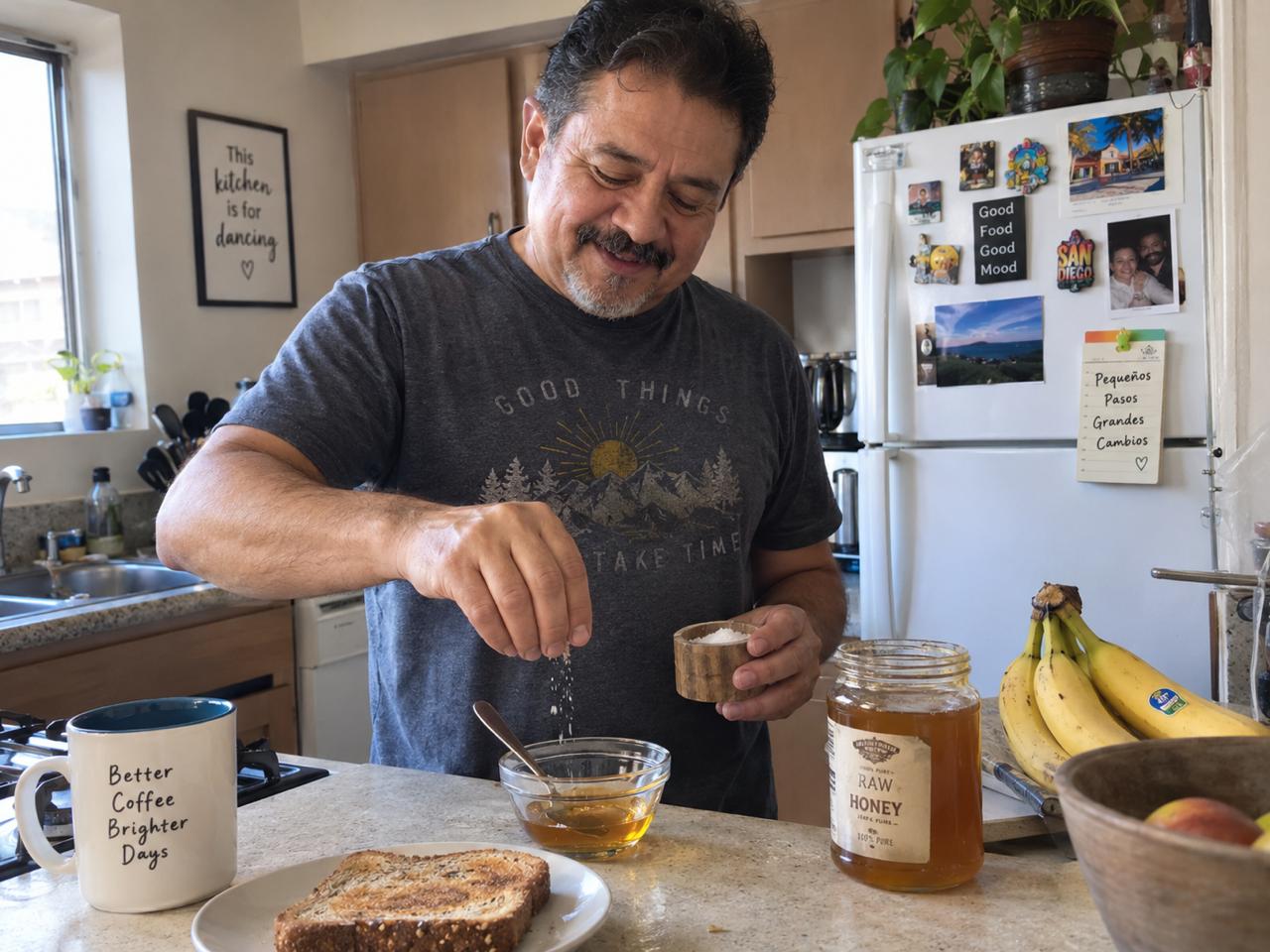
One spoonful of raw honey
The traditional version centers on a single spoonful of raw honey — an ordinary pantry ingredient with a long household history.
Miss a night, resume the next
There is no streak to protect. The next evening at the same hour is the entire recovery plan.
An Ordinary Ingredient With A Long Record
Raw honey sat in kitchen cupboards for generations before wellness became a category with packaging and subscriptions.
Nothing here turns it into a formula. The point is the opposite — using something already familiar so the routine has nothing to set up and nothing to run out of.
The presentation covers where the tradition comes from and how the spoonful fits into the evening sequence.
"The routines that survive are the ones that ask almost nothing of the evening they live in."
Six Questions About How Your Evenings Actually Go
Before adding anything, it helps to look at the shape an ordinary evening already has.
When does your evening actually end?
Most people have a moment things settle. That moment is usually a better cue than a chosen time.
How many steps are you asking of yourself?
Every additional step is another place the sequence can stop.
What happens the night after you skip?
The plan for the missed night matters more than the plan for a good one.
Is the cue something you already do?
Attaching to an existing habit costs nothing to remember.
Would this survive a busy week?
A routine that only works on calm evenings will not last the month.
Are you measuring the wrong thing?
Streak length says very little about whether a habit fits your life.
Three Ideas The Sequence Rests On
"Fix the hour before fixing anything else."
"Keep it short enough that skipping feels sillier than doing it."
"Build the restart into the plan from the first night."
Common Questions
One Hour, One Spoon, One Minute
The full approach — the tradition behind the ingredient, the evening sequence and the reasoning for keeping it this short — is covered in a short free presentation.
Watch The Free PresentationA few minutes · Opens on the advertiser’s site